 Faith & Worship
"Because of your great compassion you did not abandon them in the
desert. By day the pillar of cloud did not cease to guide them on their
path, nor the pillar of fire by night to shine on the way they were to
take." ( Neh 9:19)
"And he was in the desert for forty days, being tempted by Satan. He
was with the wild animals, and angels attended him." (Mark 1:13)
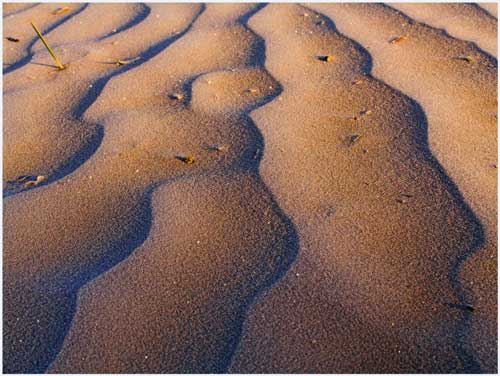
The U.S. federal government defines wilderness as an area that appears
to be affected primarily by the forces of nature with the imprint of human
influence essentially unnoticeable; with outstanding opportunities for
solitude or unconfined recreation; with at least 5000 acres or of sufficient
size to make practicable its unimpaired preservation; and may contain
features of scientific, educational, scenic, or historical value. The
U.S. Wilderness Act speaks of wilderness as areas untrammeled by man." (The Wilderness Handbook, 2001. Fred Krueger, ed.,).
Deserts, or wilderness places, occur quite often within the pages of the
Bible, both as places of solitude and conversely as places of punishment
and exile.
Robert Leal in his book ‘Wilderness in the Bible: Toward a Theology
of Wilderness’ examines this apparent dichotomy and shows that wilderness
can be viewed both positively and negatively. It can be a place of testing,
revelation, development, rebellion and punishment.
The traditions about the encounter with God in the wilderness have led
to a more contemporary theology of creation as a place of wonder, silence,
self-awareness, grace and transformation.
St. Columba, who lived in the 6th Century had such a deep love for forests
and wilderness that he insisted that his monastery was built without a
tree being cut down. He wrote that he was more afraid of the sound of
an axe in the forest than the voice of hell itself.
Thomas Merton (1915-1968) wrote, "One has to be alone, under the
sky, before everything falls into place and one finds his own place in
the midst of it all."
So how do relate our faith to the wilderness places? The Hebrew word for
wilderness or desert is miDBaR (most Hebrew words are built off of three-letter
roots, shown by the capitalization of the root letters DBR of this word).
The Hebrew root DBR has a range of meaning mostly connected to "words,"
"speaking," and "having a conversation."
In Hebrew, it comes from the root dabar, "to lead" (as in lead
cattle to pasture). That makes sense in relation to the Bible, as we find
so many occasions where God’s people, his prophets and indeed Jesus
retreated into the wilderness to draw near to God, to listen and to converse
with Him. For forty years the people of Israel experienced the isolation
of the wilderness as they made their way to the land promised to them
by God.
Moses knew that in a place such they would hear their God speaking
to them, and wanted nothing more than that they should turn to God and
repent. That it took so long for that journey is perhaps a reflection
on how difficult mankind finds it to be in that solitary place where God
can be heard and where response is an imperative rather than an option.
Where is the wilderness in our own lives? What is our experience of searching
out the solitude that the prophets found, and the early saints yearned
for?
Some have found that wilderness is everywhere around them; the vast
spaces, prairies, forests and deserts within which they have made their
home and eke out a living. Some have sought out places of retreat from
the bustle of life, where they can be at peace, put aside the stresses
and strains of the normal day and make that journey to be nearer to their
God.
For others, paradoxically, the city in which they live and work has become
their wilderness as they discover that within a population of thousands
or even millions they are alone – that it is possible even within
such a hostile environment to find space, cut out the background noise
and clutter and find the place where spiritually they can speak and be
spoken to.
'Most people's wilderness is inside them, not outside. Thinking of it as outside is a trick we play on ourselves - a trick to hide from what we really are, not comfortingly wicked, but incapable, for the time being, of establishing communion.' - - Harry Williams
1. Do you have an experience of wilderness? Have you had a holiday in one of this world's wild places, or do you live in such a place? If so, what makes these places special to you?
2. Is it easier to connect with God in the solitude of a place like this, or do you find the solitude intimidating? When you are in the comfort of your own home do you enjoy times of quiet, away from the distraction of computer, TV and the paraphernalia of modern life, or would you rather be outside with the sound of traffic, voices of pedestrians and the lights and sounds of town or city?
3. The people of God spent a considerable time being led by God through a wilderness experience. What is the story of your particular journey with God… has it been a long one… a challenge to your faith or easy to follow… have there been difficulties?
4. Consider those words of Harry Williams again ' Most people's wilderness is inside them, not outside. Thinking of it as outside is a trick we play on ourselves - a trick to hide from what we really are, not comfortingly wicked, but incapable, for the time being, of establishing communion.' Is this a point of view that you can relate to?
©John Birch · Prayers written by the author may be copied freely for worship. If reproduced elsewhere please acknowledge author/website
Privacy Policy · Links · Author · Donate
